EHS Database

This smart phone version is currently under construction. Some functions may not work correctly. The PC version is not affected.
Welcome to the Elham Historical Society database website. Feel free to browse and uncover the history of Elham. Our dedicated team of historians has recently finished recording the details on all the memorials in the graveyard.
Our chairman Derek Boughton has overseen the operation, correlating the data and checking for errors. The results of their labours can be seen on the burials page.
Swing Riots
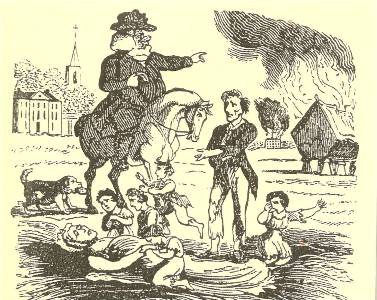
The machine breaking that led to the riots of August 1830 onwards started in the Elham Parish, writes our historian Derek Boughton, who has made a lifetime's study of the subject.
Elham residents were prominent in the gangs that sought out the new fangled threshing machines and destroyed them. Some of them cost the not inconsiderable sum for the day of £100.
Full Story
Les Ames (1905 - 1990)
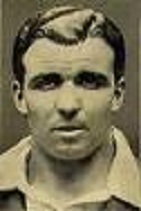
Former Elham resident Leslie Ethelbert George Ames CBE; who died suddenly at his home in Canterbury on February 26 1990 - aged 84 - was without a doubt the greatest
wicketkeeper-batsman the game has so far produced; and yet - at the time he was playing - it used to be said there were better wicketkeepers than Ames - and that he was in the England
team because of his batting. If this was so would Jardine - for example - have preferred him to Duckworth in Australia in 1932-33?
Surely not. When fully fit - Ames was England's
first-choice wicketkeeper from 1931 to 1939 - when he virtually gave up the job. For Kent - he was an integral part of their Championship side from 1927 to the first match of 1951
- when a sharp recurrence of back trouble - which had dogged him for so long - brought his career to an end while he was actually at the crease. By this time he had amassed 37248
runs - average 43.51 - made 102 hundreds - including nine double-hundreds - and passed 1000 runs in a season seventeen times - going on to 3000 once and 2000 on five occasions.
He had had a direct interest in 1121 dismissals - of which more than 1000 were effected when he was keeping wicket. His total of 418 stumpings is easily a record.
In Test cricket
- Ames played 47 matches - scoring 2434 runs with a batting average of 40.56 - and taking 74 catches - and 23 stumpings. Record 8th wicket partnership in all tests of 246 with
GO Allen :Made 123 in the pre-lunch session of the 1923 test against South Africa (a record for runs in a session): Scored centuries against every first-class county apart from Kent.
Unusually for a wicket-keeper - he also bowled over 200 overs - taking 24 first-class wickets with a bowling average of 33.37.
Ames was a Wisden Cricketer of the Year in 1929.
He was a pupil at the Harvey Grammar School in Folkestone and he also played five times for Gillingham FC.
Audrey Hepburn (1929 - 1993)

She came to village with her mother Dutch Baroness Ella van Heemstra. She lived at Orchard Cottage (now the Five Bells) and attended the private schools in the village square.
1864
ACRISE --- MALICIOUS INJURY
On Thursday, at Acrise (before the Rev. Charles Chapman), A Thomas Fox and A John Carswell were charged with breaking a window, the property of John Gibson, of Acrise. Prosecutor's wife 51 stated that about half-past five o'clock in the afternoon of the 12th inst., she was getting her children's supper, when she was alarmed by a large stone being thrown against the front door. She ran to the door, thinking it was a gun discharged, and intended to lock the door, least anyone should attempt to enter. Before she could get to the door a stone came through the window. She ran across the garden to call her husband, and she then saw the defendant sitting on a style, near. She asked him his name and be refused to tell her. Her husband came and secured the defendant Fox who was close by. He said he did not do it, but refused to say who the other defendant was. The two were in company and no one else was seen there at the time. Defendants were each fined 6d. and costs 8s. 3d.